শেয়ারFacebookWhatsApp

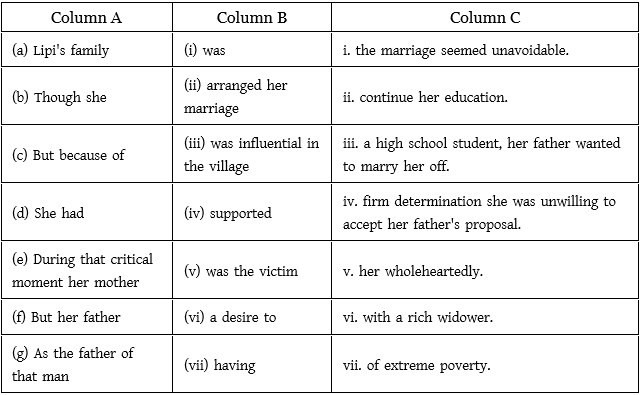
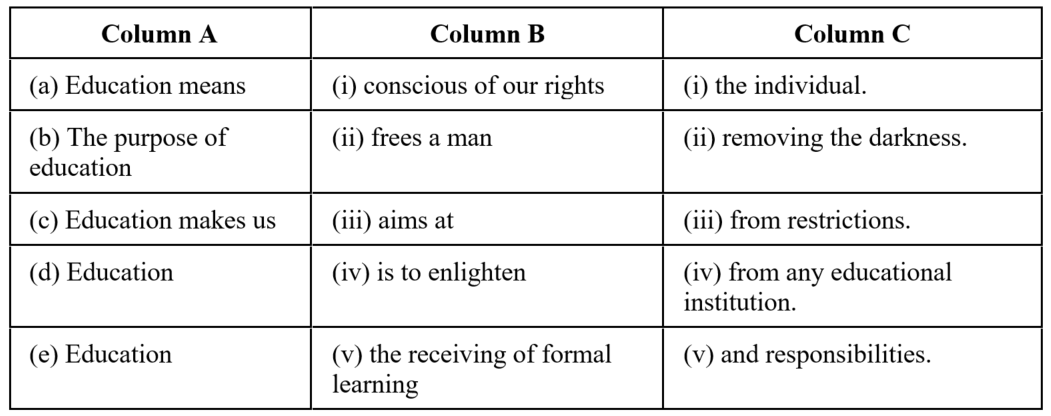
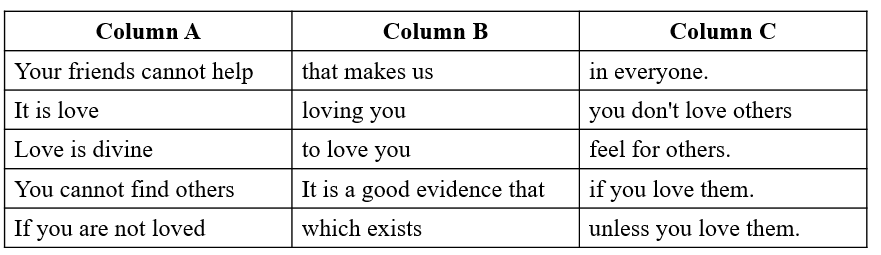
Read the following text and answer the questions no. B: In the next class Ms. Choudhury tells her students the story of Lipi. The year before last, Lipi, a 14-year old girl was in class 9 in a rural school in Rangpur. Lipi is the eldest of five children- three daughters and two sons. Their father is a day labourer working on other people's land and mother is a homemaker and a part-time worker at other people's homes. The parents, particularly the mother, found it really difficult [গণিত] raise five children on the small income the father could earn. Perhaps that is why Lipi's father wanted [গণিত] marry her off. But Lipi was not ready [গণিত] accept what her parents wanted [গণিত] impose on her. She wanted [গণিত] pursue her education. Her mother stood by her, though secretly. When her father arranged her marriage with Tara Mia, the only son of a farmer in the same village. She became greatly upset. Tara Mia was a widower-illiterate, but well off. His father had a few acres of arable land and was influential in the village. The marriage seemed [গণিত] be inevitable. B. Match the parts of sentences given in column A [গণিত] B [গণিত] and 'C [গণিত] write seven complete sentences: [চিত্র]

উত্তর: (a) Lipi's family was the victim of extreme poverty. (b) Though she was a high school student, her father wanted to marry her off. (c) But because of having firm determination she was unwilling to accept her father proposal. (d) She had a desire to continue her education. (e) During that critical moment her mother supported her wholeheartedly. (f) But her father arranged her marriage with a rich widower. (g) As the father of that man was influential in the village, the marriage seemed unavoidable.

SSC English 1st Paper Matching the parts of sentences CQ — Prosthuti প্রশ্নব্যাংক

SSC · English 1st Paper · Matching the parts of sentences · সৃজনশীল

Read the following text and answer the questions no. B: In the next class Ms. Choudhury tells her students the story of Lipi. The year before last, Lipi, a 14-year old girl was in class 9 in a rural school in Rangpur. Lipi is the eldest of five children- three daughters and two sons. Their father is a day labourer working on other people's land and mother is a homemaker and a part-time worker at other people's homes. The parents, particularly the mother, found it really difficult →raisefivechildrenonthesmallincomethefathercould\to raise five children on the small income the father could earn. Perhaps that is why Lipi's father wanted →marryher\to marry her off. But Lipi was not ready →acceptwhatherparentswanted→imposeon\to accept what her parents wanted \to impose on her. She wanted →pursueher\to pursue her education. Her mother stood by her, though secretly. When her father arranged her marriage with Tara Mia, the only son of a farmer in the same village. She became greatly upset. Tara Mia was a widower-illiterate, but well off. His father had a few acres of arable land and was influential in the village. The marriage seemed →be\to be inevitable. B. Match the parts of sentences given in column A′B′andA^{\prime} B^{\prime} and 'C′→writesevencompleteC^{\prime} \to write seven complete sentences: question image

উত্তর

(a) Lipi's family was the victim of extreme poverty. (b) Though she was a high school student, her father wanted to marry her off. (c) But because of having firm determination she was unwilling to accept her father proposal. (d) She had a desire to continue her education. (e) During that critical moment her mother supported her wholeheartedly. (f) But her father arranged her marriage with a rich widower. (g) As the father of that man was influential in the village, the marriage seemed unavoidable.
SSCEnglish 1st PaperMatching the parts of sentences
12টি সম্পর্কিত প্রশ্ন — ব্যাখ্যা লকড

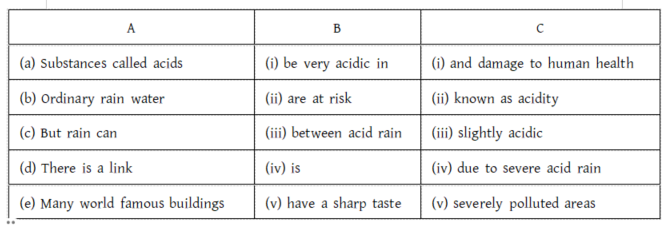
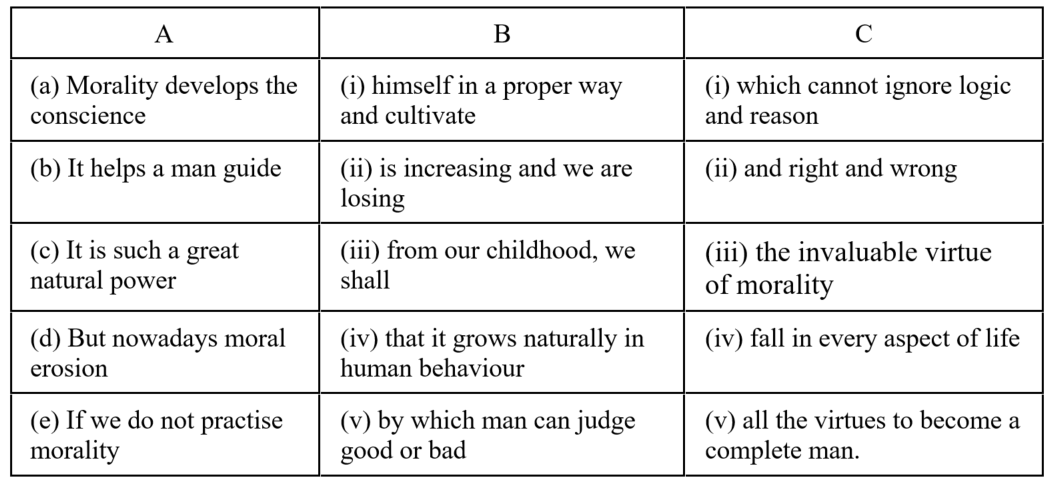
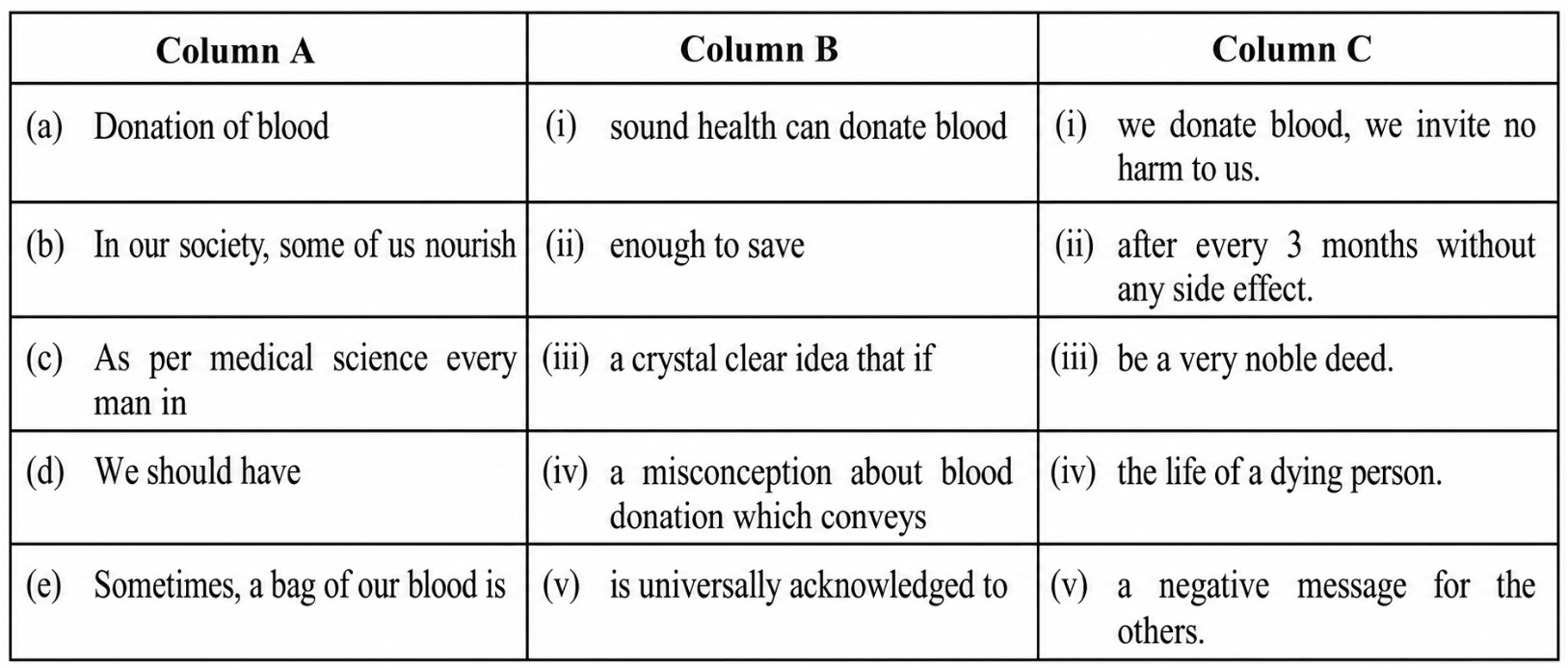
1.Match the parts of sentences in column A, B and C →writefivecomplete\to write five complete sentences:question image

Match the parts of sentences in column A, B and C →writefivecomplete\to write five complete sentences:question image

উত্তর ও ব্যাখ্যা দেখতে ফ্রি রেজিস্ট্রেশন করো

ফ্রি শুরু করো

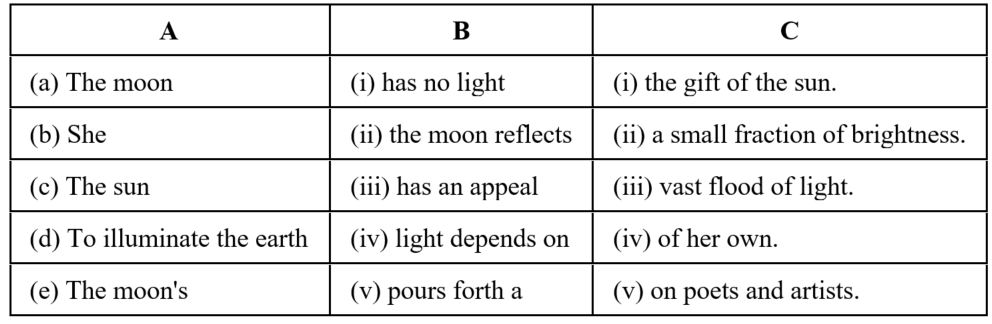
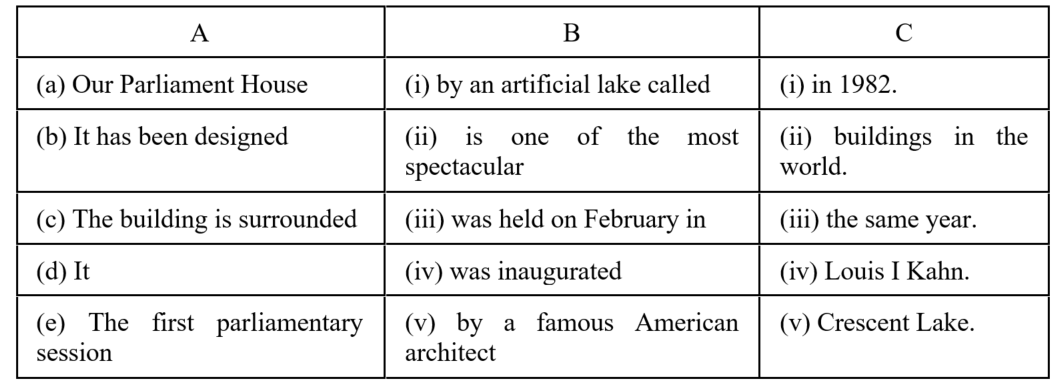
2.Match the parts of sentences in column A, B and C →writefivecomplete\to write five complete sentences. question image

Match the parts of sentences in column A, B and C →writefivecomplete\to write five complete sentences. question image

উত্তর ও ব্যাখ্যা দেখতে ফ্রি রেজিস্ট্রেশন করো

ফ্রি শুরু করো

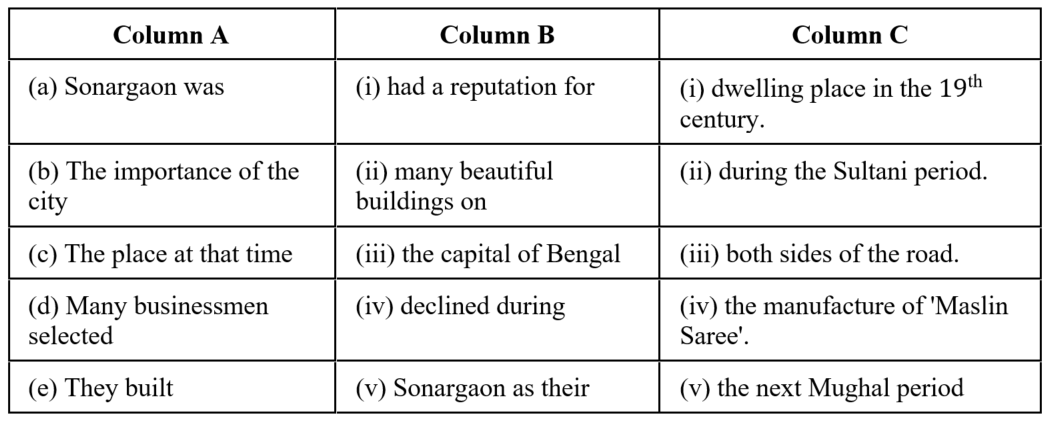
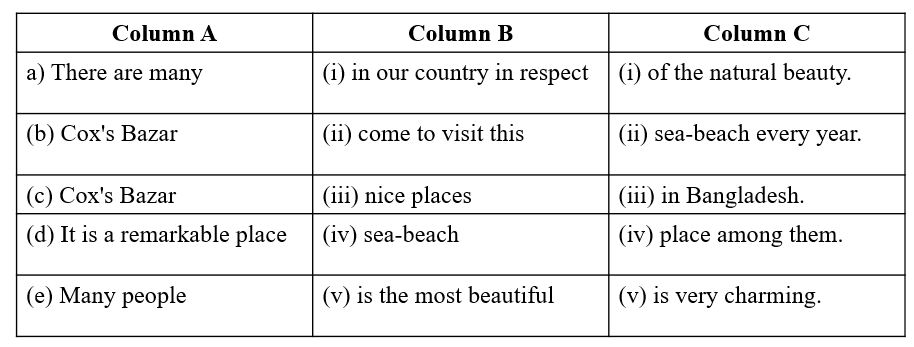
3.Match the parts of sentences in column A, B and C →writefivecomplete\to write five complete sentences. question image

Match the parts of sentences in column A, B and C →writefivecomplete\to write five complete sentences. question image

উত্তর ও ব্যাখ্যা দেখতে ফ্রি রেজিস্ট্রেশন করো

ফ্রি শুরু করো

4.Match the parts of sentences given in Column A, B and C →writefivecomplete\to write five complete sentences. question image

Match the parts of sentences given in Column A, B and C →writefivecomplete\to write five complete sentences. question image

উত্তর ও ব্যাখ্যা দেখতে ফ্রি রেজিস্ট্রেশন করো

ফ্রি শুরু করো

5.Match the parts of sentences in column A, B and C →writefivecomplete\to write five complete sentences. question image

Match the parts of sentences in column A, B and C →writefivecomplete\to write five complete sentences. question image

উত্তর ও ব্যাখ্যা দেখতে ফ্রি রেজিস্ট্রেশন করো

ফ্রি শুরু করো

6.Match the parts of the sentences given in column A, B and C →writefivecomplete\to write five complete sentences. question image

Match the parts of the sentences given in column A, B and C →writefivecomplete\to write five complete sentences. question image

উত্তর ও ব্যাখ্যা দেখতে ফ্রি রেজিস্ট্রেশন করো

ফ্রি শুরু করো

7.Match the parts of sentences given in column 'A′,A^{\prime}, 'B′andB^{\prime} and 'C′→writefivecompleteC^{\prime} \to write five complete sentences. question image

Match the parts of sentences given in column 'A′,A^{\prime}, 'B′andB^{\prime} and 'C′→writefivecompleteC^{\prime} \to write five complete sentences. question image

উত্তর ও ব্যাখ্যা দেখতে ফ্রি রেজিস্ট্রেশন করো

ফ্রি শুরু করো

8.Match the parts of sentences given in column A, B and C →writefivecomplete\to write five complete sentences. question image

Match the parts of sentences given in column A, B and C →writefivecomplete\to write five complete sentences. question image

উত্তর ও ব্যাখ্যা দেখতে ফ্রি রেজিস্ট্রেশন করো

ফ্রি শুরু করো

9.Match the parts of the sentences in column A, B and C →writefivecomplete\to write five complete sentences: question image

Match the parts of the sentences in column A, B and C →writefivecomplete\to write five complete sentences: question image

উত্তর ও ব্যাখ্যা দেখতে ফ্রি রেজিস্ট্রেশন করো

ফ্রি শুরু করো

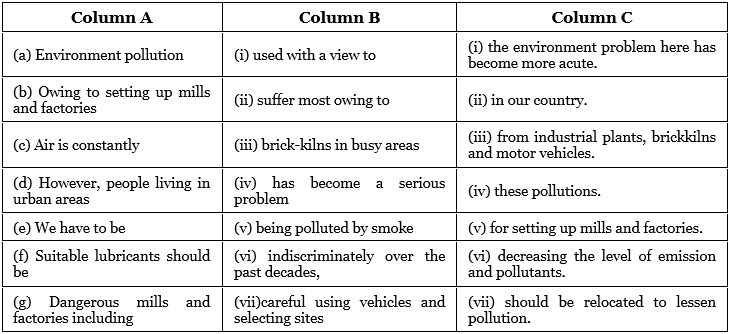
10.Read the following passage and answer the questions no. B : Air pollution comes from a wide variety of sources. In Bangladesh poisonous exhaust from industrial plants, brickkilns, old or poorly-serviced vehicles and dust from roads and construction sites are some of the major sources of air pollution. We can minimise this type of pollution by making less use of motor vehicles and avoiding the use of vehicles older than 20 years. We may also use proper lubricants →lessenthelevelofemissionand\to lessen the level of emission and pollutants. We can encourage people →useCompressedNaturalGas(CNG)orLiquidPetroleumGas(LPG)forfuellingtheir\to use Compressed Natural Gas (CNG) or Liquid Petroleum Gas (LPG) for fuelling their cars. The government may relocate hazardous industries like brick kilns →areasawayfromhuman\to areas away from human habitations. B. Match the parts of sentences in column A, B and C →writefivecomplete\to write five complete sentences. question image

Read the following passage and answer the questions no. B : Air pollution comes from a wide variety of sources. In Bangladesh poisonous exhaust from industrial plants, brickkilns, old or poorly-serviced vehicles and dust from roads and construction sites are some of the major sources of air pollution. We can minimise this type of pollution by making less use of motor vehicles and avoiding the use of vehicles older than 20 years. We may also use proper lubricants →lessenthelevelofemissionand\to lessen the level of emission and pollutants. We can encourage people →useCompressedNaturalGas(CNG)orLiquidPetroleumGas(LPG)forfuellingtheir\to use Compressed Natural Gas (CNG) or Liquid Petroleum Gas (LPG) for fuelling their cars. The government may relocate hazardous industries like brick kilns →areasawayfromhuman\to areas away from human habitations. B. Match the parts of sentences in column A, B and C →writefivecomplete\to write five complete sentences. question image

উত্তর ও ব্যাখ্যা দেখতে ফ্রি রেজিস্ট্রেশন করো

ফ্রি শুরু করো

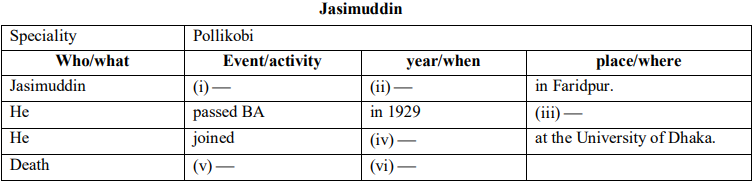
11.Read the following text carefully and answer the questions no. A: Jasimuddin was a famous Bangalee poet. He was also a song writer, folklore collector and radio personality. He is known as 'Pollikobi′becausethroughhisPollikobi^{\prime} because through his poems, he depicted the Bengali rural life. He was born in the village of Tambulkhana in Faridpur district on 1 January 1903. He received his early education at Faridpur Welfare School. He obtained BA degree in Bangla from the University of Kolkata in 1929 and MA in 1931. Jasimuddin joined the University of Dhaka in 1938 as a Lecturer of Bangla. He \left the University in 1944 and joined the Department of Information and Broadcasting. He worked there till his retirement in 1962 as Deputy Director. Jasimuddin collected more than 10,000 folk songs. He wrote poems, novels, memoirs, music etc. His major works are Rakhali, Nakshi Kanthar Maath, Sojan Badiyar Ghat, Beder Meye and Madhumala. The major honours and awards that he received are President Award for pride performance, Pakistan (1958), D.Litt by Rabindra Bharati University, India (1969), Ekushey Padak (1976), and Independence Day Award (1978). He died on 13 March 1976 and was buried near his ancestral home at Gobindapur. A. Complete the table below with information from the above passage: question image

Read the following text carefully and answer the questions no. A: Jasimuddin was a famous Bangalee poet. He was also a song writer, folklore collector and radio personality. He is known as 'Pollikobi′becausethroughhisPollikobi^{\prime} because through his poems, he depicted the Bengali rural life. He was born in the village of Tambulkhana in Faridpur district on 1 January 1903. He received his early education at Faridpur Welfare School. He obtained BA degree in Bangla from the University of Kolkata in 1929 and MA in 1931. Jasimuddin joined the University of Dhaka in 1938 as a Lecturer of Bangla. He \left the University in 1944 and joined the Department of Information and Broadcasting. He worked there till his retirement in 1962 as Deputy Director. Jasimuddin collected more than 10,000 folk songs. He wrote poems, novels, memoirs, music etc. His major works are Rakhali, Nakshi Kanthar Maath, Sojan Badiyar Ghat, Beder Meye and Madhumala. The major honours and awards that he received are President Award for pride performance, Pakistan (1958), D.Litt by Rabindra Bharati University, India (1969), Ekushey Padak (1976), and Independence Day Award (1978). He died on 13 March 1976 and was buried near his ancestral home at Gobindapur. A. Complete the table below with information from the above passage: question image

উত্তর ও ব্যাখ্যা দেখতে ফ্রি রেজিস্ট্রেশন করো

ফ্রি শুরু করো

12.Read the following text carefully and answer the questions no. A: Jasimuddin was a famous Bangalee poet. He was also a song writer, folklore collector and radio personality. He is known as 'Pollikobi′becausethroughhisPollikobi^{\prime} because through his poems, he depicted the Bengali rural life. He was born in the village of Tambulkhana in Faridpur district on 1 January 1903. He received his early education at Faridpur Welfare School. He obtained BA degree in Bangla from the University of Kolkata in 1929 and MA in 1931. Jasimuddin joined the University of Dhaka in 1938 as a Lecturer of Bangla. He \left the University in 1944 and joined the Department of Information and Broadcasting. He worked there till his retirement in 1962 as Deputy Director. Jasimuddin collected more than 10,000 folk songs. He wrote poems, novels, memoirs, music etc. His major works are Rakhali, Nakshi Kanthar Maath, Sojan Badiyar Ghat, Beder Meye and Madhumala. The major honours and awards that he received are President Award for pride performance, Pakistan (1958), D.Litt by Rabindra Bharati University, India (1969), Ekushey Padak (1976), and Independence Day Award (1978). He died on 13 March 1976 and was buried near his ancestral home at Gobindapur. A. Complete the table below with information from the above passage: question image

Read the following text carefully and answer the questions no. A: Jasimuddin was a famous Bangalee poet. He was also a song writer, folklore collector and radio personality. He is known as 'Pollikobi′becausethroughhisPollikobi^{\prime} because through his poems, he depicted the Bengali rural life. He was born in the village of Tambulkhana in Faridpur district on 1 January 1903. He received his early education at Faridpur Welfare School. He obtained BA degree in Bangla from the University of Kolkata in 1929 and MA in 1931. Jasimuddin joined the University of Dhaka in 1938 as a Lecturer of Bangla. He \left the University in 1944 and joined the Department of Information and Broadcasting. He worked there till his retirement in 1962 as Deputy Director. Jasimuddin collected more than 10,000 folk songs. He wrote poems, novels, memoirs, music etc. His major works are Rakhali, Nakshi Kanthar Maath, Sojan Badiyar Ghat, Beder Meye and Madhumala. The major honours and awards that he received are President Award for pride performance, Pakistan (1958), D.Litt by Rabindra Bharati University, India (1969), Ekushey Padak (1976), and Independence Day Award (1978). He died on 13 March 1976 and was buried near his ancestral home at Gobindapur. A. Complete the table below with information from the above passage: question image

উত্তর ও ব্যাখ্যা দেখতে ফ্রি রেজিস্ট্রেশন করো

ফ্রি শুরু করো

আরো প্রশ্ন দেখো

আরো হাজারো প্রশ্ন + মডেল টেস্ট

ফ্রি রেজিস্ট্রেশন করো — ফেভারিট, AI টিউটর, লিডারবোর্ড ও অ্যানালিটিক্স আনলক করো।